
 0 Comments

Reformer Pilates is a low-impact, full-body exercise method performed on a specialized machine designed to improve strength, flexibility, posture, and body awareness. The practice blends controlled movement, intentional breathing, and precise alignment to support physical function, mental focus, and long-term movement health.
Unlike high-impact workouts that rely on speed or heavy loading, reformer Pilates prioritizes quality of movement. Each exercise emphasizes control and efficiency, helping the body move with greater stability and balance while supporting sustainable strength over time.
What is reformer Pilates and how does it work
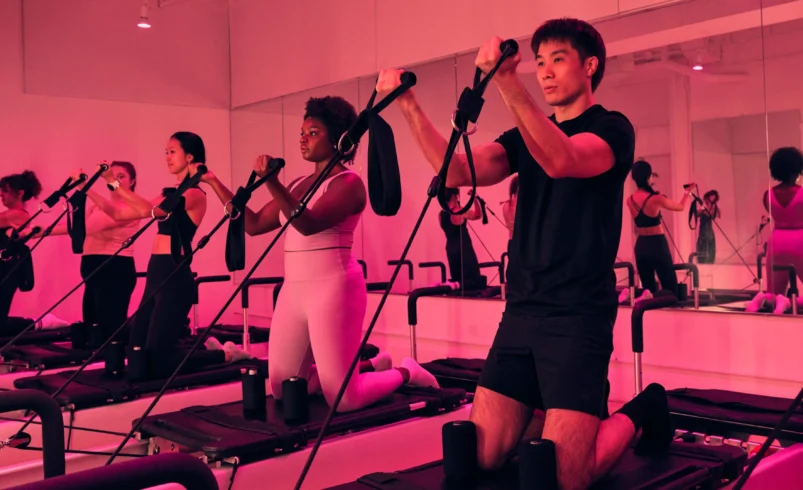
Reformer Pilates is a form of Pilates practiced on a reformer machine that uses springs, straps, and a sliding carriage to provide resistance and support. Exercises are performed slowly and with control to encourage continuous core engagement and precise alignment. The method develops strength, mobility, balance, coordination, and stability together rather than in isolation.
Movements in reformer Pilates are designed to support functional patterns such as pushing, pulling, rotating, and stabilizing. This integrated approach helps improve how the body moves during daily activities as well as structured exercise.
What is the origin of reformer Pilates?
Reformer Pilates was developed by Joseph Pilates, who created the method to support efficient, healthy movement. His approach emphasized breath, control, precision, and flow as foundations for physical well-being.
The reformer machine evolved from his early equipment designs, which used spring-based resistance to guide movement while maintaining alignment. These designs allowed the body to build strength through controlled, repeatable motion and remain central to Pilates practice today.
How the reformer machine works
The reformer is a structured piece of equipment designed to guide supported, intentional movement through adjustable resistance.
- A sliding carriage that moves smoothly along rails
- A spring system that adjusts resistance levels
- Pulleys and straps used for arm and leg exercises
- A footbar that provides leverage and positioning options
- Shoulder rests that support stability during movement
- An adjustable headrest that supports the neck and head
Each component contributes to maintaining alignment while allowing a wide range of exercises.
How resistance and support are created
The reformer’s springs provide resistance when pushing or pulling the carriage and assistance when controlling movement. Heavier springs increase challenge, while lighter springs reduce load or offer support. This allows exercises to be adapted for different experience levels and physical needs.
The moving carriage enables smooth, continuous motion that may reduce joint impact compared to high-impact exercise. Adjustable settings make the reformer suitable for a variety of body types, abilities, and fitness goals when used under proper instruction.
What are the benefits of reformer Pilates?
Reformer Pilates offers a low-impact, full-body workout that builds strength, flexibility, and control through guided resistance. By using the reformer’s spring-based system, movements are both supported and challenged—helping you develop balanced muscle engagement and greater body awareness over time.
Core strength and stability
Reformer Pilates emphasizes deep core engagement, including the muscles that support the spine and pelvis (like the transverse abdominis, pelvic floor, and multifidus). Instead of “bracing” hard for a single move, you practice steady, repeatable core activation across many positions, like lying down, seated, kneeling, and standing. That matters because your core’s main job is often control, not maximum effort.
Over time, consistent core work can help improve balance, stability, and overall movement control, especially during everyday actions like walking, climbing stairs, lifting, and turning.
Flexibility and joint mobility
Reformer Pilates encourages controlled movement through a full range of motion, with resistance that can be adjusted to either challenge you or support you. That combination helps you build flexibility with strength, not just passive stretching. Because many exercises involve smooth, guided motion on the carriage, you can explore range of motion with more feedback and less momentum.
This approach may support muscle length and elasticity, and help joints move more smoothly over time, especially in common tight spots like the hips, hamstrings, shoulders, and upper back.
Posture and alignment improvement
Reformer Pilates focuses on spinal alignment and muscular balance, which means strengthening what’s underactive and reducing over-reliance on the muscles that tend to dominate (often the neck, upper traps, hip flexors, or low back).
The reformer also gives built-in feedback: straps, springs, and the moving carriage can quickly show when you’re shifting, collapsing, or gripping.
Strengthening postural muscles, like the glutes, mid back, and deep abdominals, can help support upright posture and reduce reliance on inefficient movement patterns. This can be especially helpful for people who sit a lot or move in repetitive ways.
Muscle endurance and lean tone
Reformer Pilates builds muscular endurance through sustained, low-impact resistance. Instead of lifting heavy once or twice, you’ll often do controlled reps, longer sets, and slow tempos that keep muscles working continuously.
Springs create resistance that stays on through more of the movement, which can increase time under tension without requiring heavy weights. The method supports lean muscle development by emphasizing controlled effort, precision, and consistency. This helps you build strength that often translates well to real life movement.
Injury prevention and rehabilitation support
Reformer Pilates places minimal impact on joints while strengthening stabilizing muscles that help support common problem areas like hips, knees, shoulders, and the spine. The machine’s adjustable springs make it easier to scale intensity and range of motion, which can be helpful when you’re building confidence back after time off or working around limitations.
When guided by a qualified instructor, the method may support injury prevention and a safe return to movement following physical setbacks by prioritizing alignment, controlled loading, and gradual progression.
Mental focus and stress support
Reformer Pilates requires attention to breath, alignment, and movement quality, which naturally shifts your focus away from multitasking and toward what your body is doing in the moment. Many sessions use steady breathing patterns paired with precise movement, creating a calm, rhythmic pace that feels different from high-intensity workouts.
This mindful approach can help support focus, relaxation, and a stronger mind body connection. It can also create a sense of accomplishment as you master small, specific improvements over time.
Reformer Pilates vs mat Pilates
While reformer Pilates gets a lot of attention for its equipment, it’s not the only way to practice Pilates. Another common format is mat Pilates. Both styles follow the same core Pilates principles, but the experience and how resistance is created differ based on whether you’re using equipment or just your body.
Equipment-based resistance compared to bodyweight
Reformer Pilates uses springs, straps, and a moving carriage to provide adjustable resistance or assistance. That adjustability is the big difference: you can make an exercise lighter for support (helpful when you’re learning form) or heavier for strength (helpful when you want more challenge) without changing the movement pattern.
The straps also let you train pulling and pushing in ways that can be tricky on a mat. Mat Pilates relies primarily on bodyweight and gravity to create challenges. Because you do not have springs assisting you, mat work often demands more control to hold positions and manage leverage, especially in moves where you are fighting gravity the whole time.
Exercise variety and intensity
The reformer allows for a broader range of exercises and variations. With the carriage, footbar, and straps, you can work in more setups, like lying down, kneeling, seated, and standing. This makes it easier to target strength, mobility, and coordination from different angles.
Resistance can be adjusted easily, which supports gradual progression or regression based on individual needs. Mat Pilates can still be intense, but intensity usually comes from longer holds, smaller ranges of motion, slower tempos, or more advanced leverage. It does not usually come from dialing resistance up or down.
Accessibility for different experience levels
Reformer Pilates is often accessible for beginners or individuals with movement limitations because the equipment provides support and feedback.
The carriage supports your body weight, and springs can reduce load while you learn alignment and timing. This helps you practice clean reps without rushing. Mat Pilates typically requires more unassisted strength and control from the start.
That said, both can be beginner friendly with good coaching. The best choice often comes down to what feels more approachable and what keeps you consistent.
Physical changes from reformer Pilates
Long, lean muscle development
Reformer Pilates uses controlled resistance to engage muscles efficiently and evenly. The spring resistance encourages muscles to work through both the effort phase and the return phase, which can help create a more balanced training effect. This approach supports functional strength and muscle definition without emphasizing bulk.
You’ll also tend to feel “worked” in stabilizers (glutes, deep core, upper back) that don’t always get attention in faster-paced workouts.
Improved core strength and total-body coordination
Reformer Pilates strengthens deep core muscles while engaging multiple muscle groups together. A lot of exercises require your arms and legs to move while your trunk stays steady, which is a practical way to train coordination. This coordinated training may improve balance, stability, and movement efficiency.
In everyday terms: you may feel steadier carrying bags, moving quickly, climbing stairs, or changing direction without feeling wobbly or tense.
Better posture and reduced physical tension
Reformer Pilates helps rebalance muscles that are commonly overused or underused due to daily habits. If you sit often, you might notice the work goes right to areas like glutes, upper back, and deep abdominals. These are the muscles that support posture without forcing you to “sit up straight.”
Supported spinal movement can help relieve excess tension and improve comfort.
The biggest win here is usually awareness: you start noticing when you’re gripping your shoulders, locking your ribs, or defaulting to your low back.
Healthier joints and smoother movement
Gentle, full-range exercises promote joint movement and stability. Because the reformer can reduce impact while still adding resistance, you can train the muscles that support joints without pounding on them. Strengthening the muscles surrounding joints may support long-term joint health.
Many people also like how the carriage encourages smoother pacing, with less jerky momentum and more controlled transitions.
Greater body awareness and control
Reformer Pilates improves proprioception, which is your awareness of body position and movement. The machine gives constant feedback through strap tension, carriage movement, and spring load. This can make it easier to feel when you are aligned, or when you are compensating. Increased awareness can support more precise and confident movement patterns.
Over time, that control can carry into other workouts too, especially strength training, running mechanics, or sports where stability matters.
Who can benefit from reformer Pilates
Reformer Pilates is designed to be adaptable, which makes it accessible to a wide range of people and movement backgrounds.
All fitness levels
Reformer Pilates works for beginners and seasoned movers because the resistance is adjustable. Springs can make a move feel lighter or more challenging. Your instructor can also change the range of motion, tempo, and setup.
That means you can start simple and still keep leveling up as you build strength, balance, and coordination.
People seeking low-impact exercise
Want something that feels effective without pounding your joints? Reformer Pilates is low impact, but it still hits your full body.
You’ll work your legs, glutes, core, and upper body through controlled reps that build strength and stability, without high impact jumps.
Athletes and dancers
Reformer Pilates is a favorite add-on for athletes and dancers because it supports:
- Core strength for power and control
- Balance and coordination for cleaner movement
- Mobility and flexibility to move better, not just more
A lot of people use it as cross-training to improve alignment and efficiency, so their main sport feels smoother.
Post-injury recovery (with the right support)
Reformer Pilates can be a great option when you’re coming back from an injury because it’s controlled and adjustable. Many exercises focus on alignment, stability, and rebuilding strength step by step.
Quick note: if you’re recovering from an injury, it’s smart to check with a medical pro first and let your instructor know what’s going on so they can offer safer modifications.
Anyone focused on posture and daily movement
Reformer Pilates isn’t just about “workout results.” It’s also about moving through life with more support. Consistent practice can help with:
- Posture and core engagement
- Better body awareness (hello, less slouching at your desk)
- Stronger patterns for everyday stuff like standing, walking, and lifting
If you want a workout that carries over into real life, this one’s a solid pick.
Getting started with reformer Pilates
Starting Reformer Pilates can feel intimidating at first, but the process is more approachable than it seems. With the right studio and an intro-level class, you can ease into the equipment, learn the basics, and build confidence from your very first session.
Finding a reformer Pilates studio
Finding a class is the easy part. With ClassPass, you can search for reformer Pilates near you, compare times and locations, and book in just a few taps.
Reformer Pilates is most common at dedicated Pilates studios, but you’ll also see it offered at boutique fitness studios and some full-service gyms. If you’re brand new, look for class names like:
- Reformer fundamentals
- Reformer 101 / intro to reformer
- Beginner reformer
Smaller classes are a bonus when you’re starting out. They usually mean more hands-on coaching, more form checks, and a little extra time to get comfortable with the equipment.
What to expect in your first reformer Pilates class
Your first reformer class will likely feel equal parts “I’ve got this” and “Wait, what is this strap doing?” Totally normal. Most intro classes are designed to slow things down and help you learn the basics, including:
- How the reformer works (carriage, footbar, straps, headrest)
- What springs do and how resistance changes the feel of a move
- Foundational Pilates cues, like keeping your core engaged and moving with control
- A few classic exercises that show up often (think: leg presses, bridges, arms in straps)
Instructors usually offer options, so you can make moves lighter, slower, or smaller as needed.
What to wear and bring to a reformer Pilates class
- Fitted, stretchy clothes you can move in (avoid super-baggy fabric that can catch on straps)
- Grip socks for traction and stability (many studios require them)
- Water if you like sipping between sets
Tips for a positive experience
Reformer Pilates is a skill. The fastest “wins” come from showing up, staying curious, and letting your body learn the method over time.
A few tips that help most beginners:
- Start with beginner classes for a few sessions before moving up to higher levels
- Arrive a little early so the instructor can set you up and answer questions
- Go slow on purpose. Control is the whole point, and it helps keep you safe
- Ask for spring guidance if you are unsure. Springs can change everything
- Stay consistent. Even 1 to 2 classes a week can help you feel the difference
- Do not chase intensity. Reformer Pilates can be challenging without feeling maxed out
And if something doesn’t feel right (pinchy, sharp, or unstable), flag it. A good instructor will offer a modification fast.
Reformer Pilates at a glance
Reformer Pilates is a great way to build strength, improve mobility, and support better posture in a low impact, joint friendly way. It combines resistance, control, and mindful movement without relying on heavy weights or high impact exercises.
That is what makes it a strong option for people who want a workout that feels challenging and sustainable. Spring based resistance adapts to your body, helping you build deep core strength, full body control, and better alignment over time. With a steady pace and a focus on form, Reformer Pilates supports intentional movement that can carry over into everyday life. It is a practice you can come back to and grow with, one controlled rep at a time.
Find reformer Pilates classes near you on ClassPass.